

Every spring, it happens like clockwork. A few warm days hit, the snow disappears, and sprinklers start turning on across the neighborhood.
It feels right. It feels proactive. It feels like you’re helping your lawn.
But in most of Utah, watering too early is one of the most common ways people waste water without helping their yard at all. Did you know just one day of watering your lawn uses over 2,500 gallons of water? That’s why it’s important to only water when your yard needs it. In fact, it could actually hurt your lawn if you start too early.
The soil already has what your lawn needs
Utah’s lawns come out of winter with a hidden advantage. Snowpack and early spring storms slowly soak into the soil, creating a natural reservoir of moisture below the surface.
Even if the top layer looks dry, the root zone often still has plenty of water available. Grass roots are built to reach down and use that stored moisture as they come out of dormancy.
Turning on your sprinklers too early does not help your lawn grow. In many cases, it simply adds water the soil cannot absorb. It also prevents your grass roots from growing deeper which helps them find moisture deeper.
Cooler weather means your lawn is using less water
In early spring, temperatures are typically mild and days are shorter. That combination slows down evaporation and reduces how much water your lawn actually needs. Your grass is also not growing as aggressively yet, which means its water demand is still relatively low. Watering during this period often results in excess moisture sitting in the soil or running off, especially in areas with heavier soils.
Watering too early can work against you
Starting irrigation too soon can create unintended problems. It encourages shallow root growth, since water is constantly available near the surface. That makes your lawn more dependent on frequent watering later in the summer, right when water demand is highest.
It can also lead to wasted water through runoff and evaporation, particularly when systems are turned on before they are properly adjusted for the season.
So when should you start?
For most of Utah, April is still too early. A good rule of thumb is to wait until May before regularly watering your lawn, with the exception of warmer areas like Washington County.
But instead of relying only on the calendar, the best approach is to watch your lawn and check your soil.
Signs it’s time to start watering
Your lawn will tell you when it’s ready.
Look for these indicators:
- Grass blades begin to lose their bright spring green color and take on a dull or bluish tint
- Footprints remain visible after you walk across the lawn
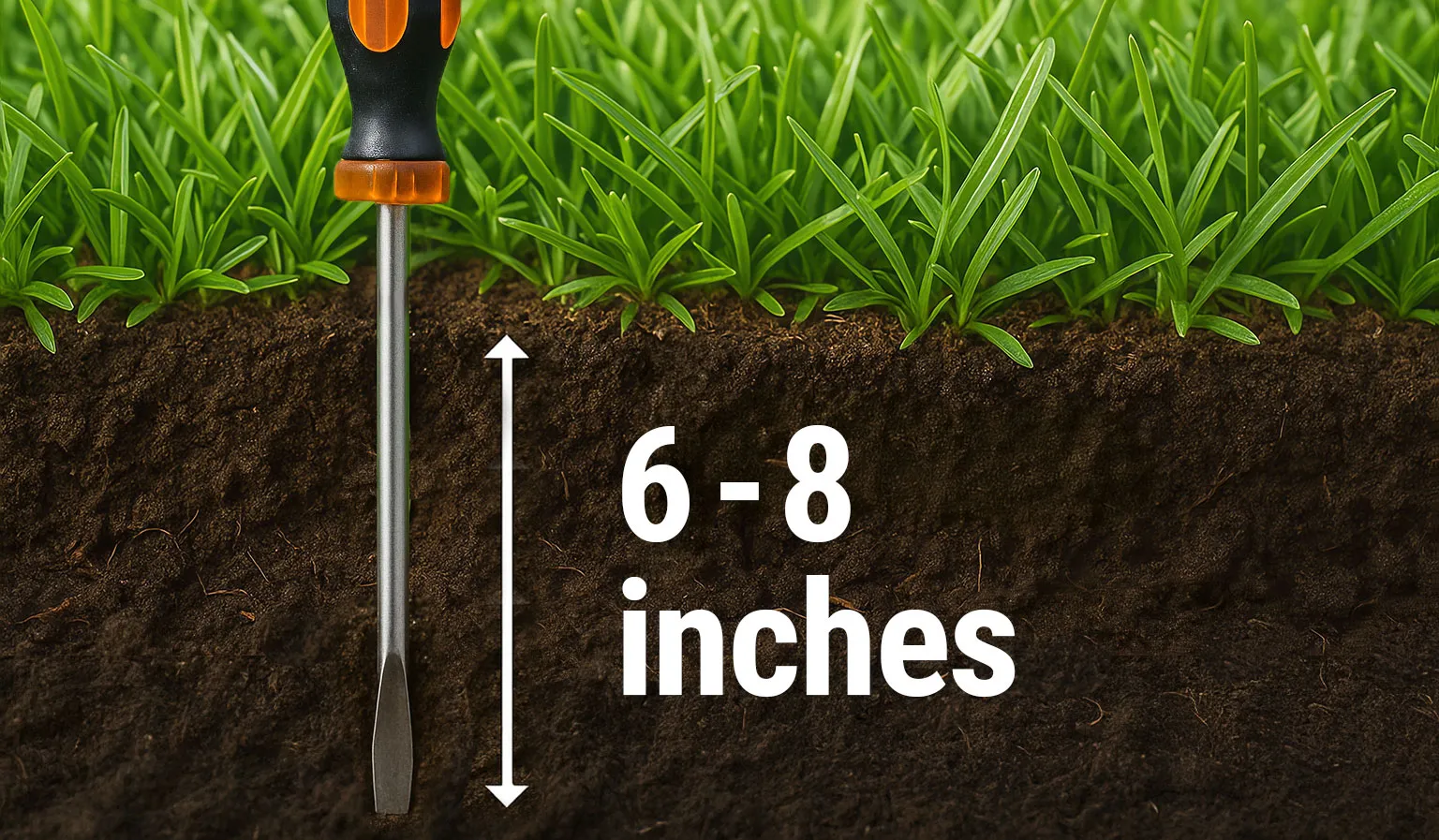
- The soil about 6 inches below the surface feels dry to the touch
- Use a screwdriver to dig down into the soil to check
If the soil is still moist below the surface, your lawn does not need water yet.

Start slow and adjust
When it is time to begin watering, ease into it. You do not need to jump into a full summer schedule right away. Start with once a week and shorter run times, then adjust as temperatures rise and your lawn’s needs increase. This gradual approach helps your lawn transition naturally while avoiding unnecessary water use. Instead of using a weekly timer instead use the methods above to know if your yard needs water. This will help to avoid unnecessary watering.
Thinking about changing your landscape? Now is the time
Early spring is also the ideal time to plan bigger changes to your yard. If you have been considering reducing lawn area or switching to more water-wise landscaping, now is the time to start.
Landscape rebate programs through Slow the Flow can help offset the cost of removing high-water-use turf and replacing it with native or drought resistant plants and permeable hardscaping that drop your water use significantly. Applying early in the season gives you time to get approved, plan your project, and complete the work before peak summer heat.
It is one of the most impactful ways to lower outdoor water use long term while still creating a yard that looks great and functions well in Utah’s climate.

Use what nature already gave you
Waiting to water is one of the simplest ways to conserve water without sacrificing a healthy yard. It allows your lawn to fully use the moisture already stored in the soil and build a stronger, deeper root system.
In Utah, a healthy lawn is not about watering sooner. It is about watering smarter, starting at the right time, and letting nature do its part first.